Return to Uzone News Portal

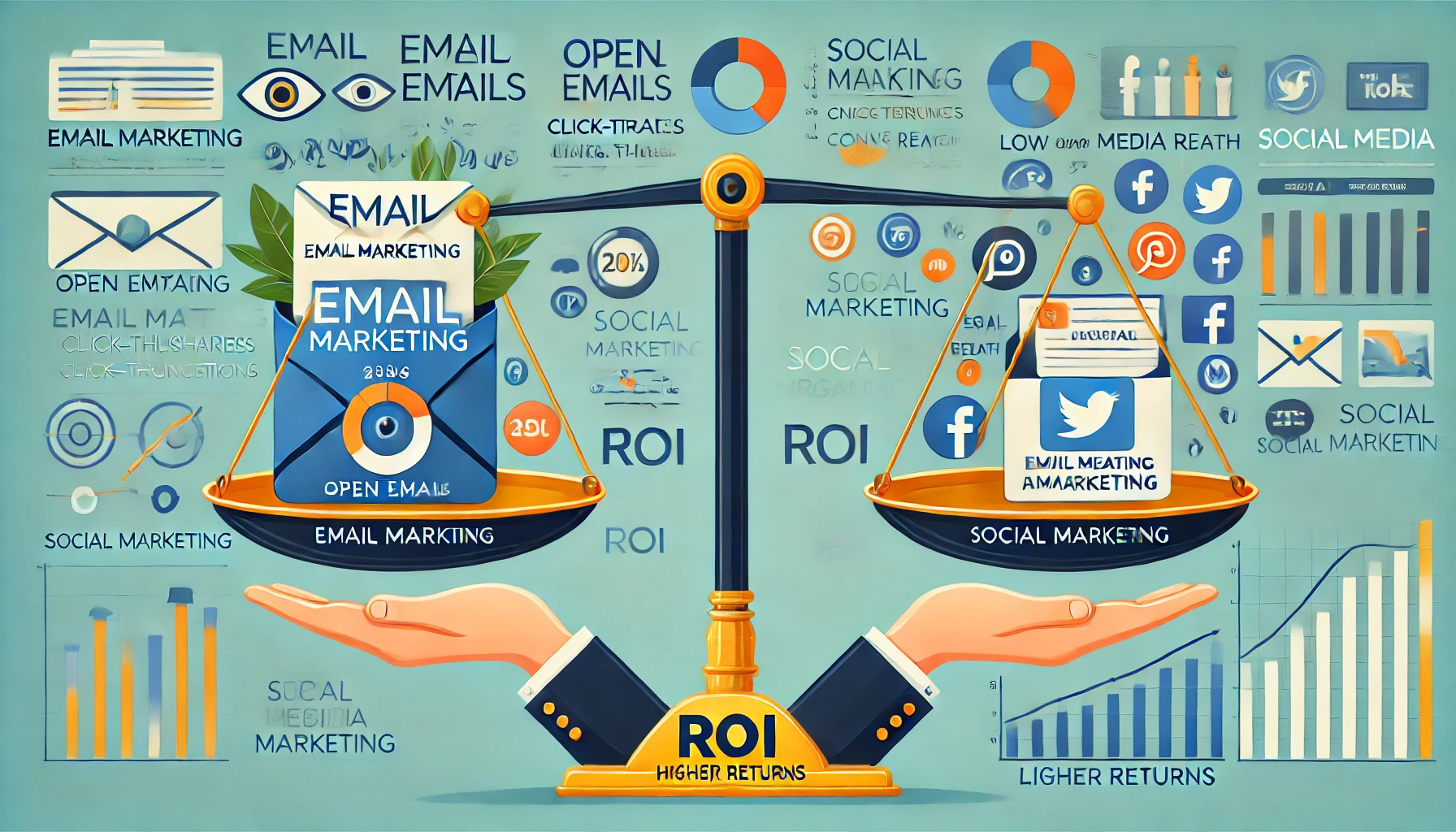
Businesses entering the competitive arena of digital marketing often find themselves at a crossroads, wondering which specific technique—social media marketing or email marketing—truly performs better when it comes to the bottom line: sales. While both strategies are essential components of a modern marketing mix, they function differently across various performance metrics. This article provides an in-depth comparison of their reach, interaction levels, conversion rates, and return on investment (ROI) to determine which method holds the edge for driving revenue.
1. Reach and Interaction : Email Marketing vs. Social Media
Email Marketing
- Email marketing is unique because it grants a direct, one-to-one interaction with customers. Unlike public posts, an email sits in a private inbox, waiting for the user’s attention.
- Current research indicates that approximately 99% of people check their emails daily, making it one of the most dependable communication platforms available today.
- Because of this personal nature, well-crafted and personalized emails drive significant activity, boasting average open rates of 20-30% and click-through rates (CTR) of 3-5%.
Social Media Marketing
- On the other hand, platforms such as Facebook, Instagram, and X (formerly Twitter) provide businesses with massive audience exposure and the potential for virality. However, the landscape has shifted significantly in recent years.
- Organic reach on sites like Facebook has dropped below 5% due to aggressive algorithm changes that prioritize paid content.
- This means that engagement levels on social media are highly dependent on the ever-changing performance of the platform’s algorithm, making it less dependable for consistent communication than email.
2. Conversion Rates: Which One Performs Better for Sales?
Email Marketing
- When looking at hard data, email marketing consistently carries an average conversion rate of 4.29%, which is notably greater than most social media platforms.
- The success of email in this category is driven by clear Calls to Action (CTAs), automated follow-ups, and precise audience segmentation.
- Studies have shown that 66% of customers have made a purchase directly as a result of an email marketing campaign, proving its effectiveness in moving a lead through the final stages of the sales funnel.
Social Media Marketing
- Social media plays a massive role in influencing purchase decisions, but its direct conversion rates are typically lower. On average, conversion rates hover around 0.71% on Facebook and 1.85% on Instagram. This discrepancy exists because the majority of users visit social media platforms for entertainment, news, or social connection rather than with a “ready-to-buy” mindset. While social media is excellent for discovery, it often requires more steps to finalize a sale compared to a direct email link.
3. Return on Investment (ROI) : Email Marketing vs. Social Media
Email Marketing ROI
- Email marketing is famous for having one of the highest-returning marketing activities in the digital space. It offers a staggering mean ROI of $42 for every $1 invested. This incredible efficiency is achieved through high levels of automation and the use of cost-effective email service providers (ESPs), which allow businesses to reach thousands of people at a very low cost per message.
Social Media ROI
- Calculating social media ROI is more complex, as it is heavily dependent on promoted posts and partnerships with influencers. While organic social media activities build brand equity, they often bring in lower direct income. Furthermore, paid advertising on platforms like Facebook and Instagram can be costly; Cost-Per-Click (CPC) prices frequently range from $0.50 to $3.50, which can quickly eat into profit margins if the conversion funnel is not perfectly optimized.
4. Customer Relationship Management and Retention
Email Marketing
- Retention is where email truly shines. It supports ongoing one-to-one communication, enabling brands to build stronger, long-term customer relationships. Through the use of drip campaigns, loyalty rewards, and exclusive promotional offers, businesses can keep their subscribers engaged and prevent them from churning.
Social Media Marketing
- Social media is a powerhouse for raising brand awareness and fostering community engagement. However, it lacks the deep direct relationship management capabilities found in email. A significant risk with social media is that companies do not “own” their followers; instead, the platforms manage audience engagement through algorithms. If a platform changes its rules or loses popularity, a business can lose its connection to its audience overnight.
Which Approach Is Better for Sales?
Although both play critical functions in a digital strategy, email marketing consistently beats social media in generating direct sales. With its vastly improved conversion rates, robust ROI, and the ability for direct interaction, email remains the best option for businesses focused on increasing immediate revenue.
That aside, the two tactics are best utilized together for optimal success. A balanced approach uses social media for brand awareness and lead generation, and email marketing for lead nurturing and conversion into loyal customers.
Key Takeaways:
- Utilize email marketing for optimal conversion rates and one-to-one interaction.
- Utilize social media for brand awareness and lead generation.
- Combine both tactics for optimal sales performance.
Do you believe that email marketing is the ultimate sales accelerator, or does the viral potential of social media offer a better long-term advantage? Share your thoughts in the comments!